Discovering fungus on your spotting scope lenses can be a disheartening experience, casting a hazy shadow over your pristine views. This unwelcome guest, often appearing as delicate web-like patterns or frosty streaks, isn’t just an aesthetic nuisance; it actively degrades image quality and can permanently etch your valuable optics if left unchecked. Whether you’re a seasoned birdwatcher, a dedicated hunter, or an astronomy enthusiast, maintaining clear lenses is paramount for optimal performance. This guide will walk you through safe, do-it-yourself methods to tackle lens fungus, offering practical advice on identification, cleaning, and essential prevention techniques to keep your spotting scope in peak condition.
Understanding Spotting Scope Fungus: Identification and Risks
Fungus on optical components, often referred to as “lens fungus,” is a common problem, especially for equipment stored in humid conditions. This microscopic intruder thrives in specific environments, turning your precision instrument into its breeding ground.
What is lens fungus?
Lens fungus is a type of mold that grows on and inside optical surfaces. Its spores are ubiquitous, carried by the air, and require specific conditions to germinate and flourish. It feeds on organic materials like dust, oils from fingerprints, and even some lens coatings, secreting acidic waste products that are highly corrosive to glass and coatings.
How to identify fungus on your spotting scope
Identifying lens fungus typically involves a careful visual inspection. Remove the front and rear caps from your spotting scope and hold it up to a strong light source. Look through both ends of the lens system. Fungus often appears as:
- Thin, web-like threads: These are often the first sign, resembling spiderwebs or frost creeping across the internal glass elements.
- Patchy spots: Irregular, hazy patches that obscure portions of the view.
- Branching patterns: More advanced growth might show distinct, branching structures.
- Etching marks: In severe cases, even after cleaning, you might notice faint marks that look like permanent scratches or dull spots, indicating where the acid produced by the fungus has permanently damaged the lens coating or glass itself.
Early detection is key, as mild surface fungus is far easier to address than deeply entrenched growth.
Why fungus is a problem (damage to coatings, glass etching, image quality)
The presence of fungus directly impacts your spotting scope’s performance. Initially, you might notice a slight loss of image brightness and reduced contrast. As the fungus spreads, light scattering increases, leading to a noticeable decrease in image sharpness and clarity, making your observations hazy and dull. More critically, the hydroflufluoric acid produced by the fungus digests lens coatings and can permanently etch the glass. This damage is irreversible and can significantly diminish the scope’s value and usability. In advanced stages, the damage can render the optics unusable, making professional repair or replacement the only options.
When DIY is appropriate vs. professional help
DIY fungus removal is generally suitable for mild, superficial fungus found on the outer surfaces of your lens elements. If the fungus is easily accessible and has not deeply etched the glass, you stand a good chance of successful removal. However, if the fungus is extensive, appears to be deeply internal (between cemented elements), or if you are uncomfortable with minor disassembly of your optical instrument, it’s best to consult a professional optical technician. Attempting to disassemble complex optical systems without the right tools or expertise can cause more harm than good, potentially misaligning elements or damaging delicate internal components.
Essential Tools and Safe Cleaning Solutions for DIY Fungus Removal
Before you begin the cleaning process, gathering the right tools and preparing your workspace for safety are paramount. Working with optical components requires a gentle touch and appropriate precautions, especially when using chemical solutions.
Safety gear (gloves, goggles, ventilation)
Your safety should be the top priority. Always work in a well-ventilated area, preferably outdoors or near an open window, to avoid inhaling fumes from cleaning solutions. Protect your skin and eyes by wearing:
- Latex or Nitrile Gloves: These protect your hands from chemical contact and prevent transferring skin oils to the lens surfaces.
- Protective Goggles or Eyewear: Essential for safeguarding your eyes from accidental splashes or fumes.
DIY Fungicide Solution: Hydrogen Peroxide & Ammonia (mixing, precautions)
A commonly recommended DIY fungicide solution is a mixture of hydrogen peroxide and ammonia. This solution acts as a powerful cleaning agent to kill and remove fungal growth.
- Ingredients:
- Hydrogen Peroxide (H2O2) – typically 3% solution, readily available.
- Ammonia (NH3) – household ammonia cleaner.
- Mixing: Combine equal parts (e.g., 5ml of each) of hydrogen peroxide and ammonia in a small, clean, non-metallic bowl. It is crucial to mix this solution just prior to use and do not store any leftover mixture, as it can degrade or become unstable.
- Precautions: Ammonia fumes can be strong and irritating. Ensure excellent ventilation. Avoid skin and eye contact. If skin contact occurs, wash thoroughly with water. If swallowed or if fumes are inhaled excessively, seek medical attention.
Alternative mild solutions (if applicable, with caveats)
For very minor, surface-level fungus that hasn’t deeply rooted, some milder alternatives might be considered, though their efficacy against established fungus is lower:
- Isopropyl Alcohol (IPA): A common lens cleaner, IPA can help remove surface contaminants and some fungal spores. However, it may not kill all types of fungus or remove its acidic residue effectively. Use high-purity IPA (70% or higher) with caution, as it can sometimes affect older lens coatings.
- Distilled Water and Lens Cleaning Solution: A dedicated optical lens cleaning solution, combined with distilled water, can be effective for general lens cleaning but might only address very early-stage or superficial fungal traces.
It is important to exercise caution with any chemical solution. Always test a small, inconspicuous area if unsure, and avoid excessive soaking, especially if your spotting scope is not fully sealed or waterproof.
Other necessary tools (microfiber, Q-tips, blower, spanner wrench – with caveats)
Beyond the cleaning solution, several other tools will make the process safer and more effective:
- Microfiber Cleaning Cloths: Use soft, lint-free microfiber cloths specifically designed for optics. Never use abrasive materials or cloths that might scratch lens coatings.
- Cotton Balls or Q-tips: Excellent for applying the cleaning solution with precision to affected areas.
- Lens Blower/Air Blaster: Use to remove loose dust and debris before cleaning and to dry the lens surfaces afterward without touching them.
- Small Syringe (without needle): Useful for precise application of the fungicide mixture if direct wiping is difficult.
- Lens Spanner Wrench (with caveats): If fungus is internal and requires disassembling lens elements, a spanner wrench is indispensable. However, disassembly should only be attempted by those with mechanical aptitude and confidence in reassembly, as incorrect reassembly can misalign optical elements, affecting performance, or damage threads. For most DIY users, focus on accessible external elements first.
- Clean, Flat Work Surface: A well-lit, clean area, preferably covered with a soft, lint-free cloth or paper towels, provides a safe environment for working with delicate optical components.
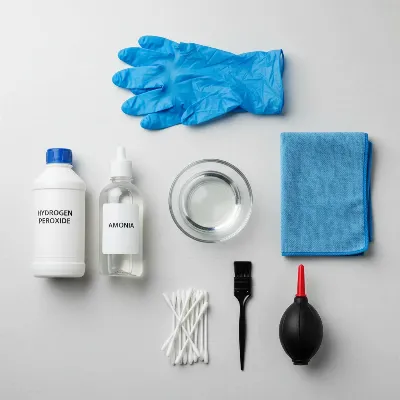 Essential tools for safe DIY fungus removal from spotting scope lenses including gloves, cleaning solution, and microfiber cloth.
Step-by-Step Guide to Safely Cleaning Spotting Scope Lens Fungus
Once you have your safety gear and cleaning supplies ready, you can proceed with the careful process of removing fungus from your spotting scope lenses. Remember, patience and precision are key to avoiding further damage.
Preparation: Workspace and Disassembly (if needed)
- Set up your workspace: Choose a clean, well-lit, and well-ventilated area. Lay down a soft, lint-free cloth or paper towels on your work surface to protect the lens elements from scratches.
- Initial Cleaning: Use a lens blower or an air blaster to gently remove any loose dust, dirt, or debris from the lens surfaces. Avoid wiping dry lenses, as this can grind abrasive particles into the glass.
- Assess Disassembly Needs: Carefully inspect where the fungus is located. If it’s on the outermost lens elements (front objective or eyepiece), you might not need to disassemble anything. If it’s deeper inside, you might need to remove the front or rear lens elements. If disassembly is required, proceed with extreme caution. Mark the orientation of each element with a permanent marker (on the barrel, not the glass) before removal, and note the order of parts. A lens spanner wrench may be needed for retaining rings. Only proceed if you are confident in your ability to reassemble correctly. If unsure, consider professional help.
Applying the Fungicide Solution
- Put on safety gear: Ensure you are wearing gloves and protective eyewear.
- Mix the solution: Prepare your 50/50 hydrogen peroxide and ammonia mixture in a small, clean bowl. Remember to only mix what you need and discard any leftover solution.
- Apply to fungus:
- For accessible surfaces: Moisten a cotton ball or Q-tip with the mixture, ensuring it’s damp but not dripping wet. Gently wipe the affected lens surface in a circular motion, or from the center outwards in arcs, covering the entire area where fungus is visible. For stubborn spots, a Q-tip allows for more focused scrubbing.
- For less accessible areas (if disassembled): If you’ve managed to remove a lens element, you can apply a few drops of the fungicide directly onto the affected surface using a small syringe. Then, gently spread the drops over the surface with a cotton-tipped swab.
Dwell time and gentle removal
- Allow to work: Let the fungicide solution sit on the lens surface for a short period. For hydrogen peroxide and ammonia, about 5 minutes is usually sufficient for surface fungus. Some sources suggest up to an hour for a stronger mix, reapplying if it dries out. Periodically check the surface.
- Gentle absorption: After the dwell time, do not rub the lens aggressively. Instead, gently apply a clean, dry piece of lens tissue or the edge of a microfiber cloth directly onto the treated surface to absorb the liquid. Repeat this with fresh tissue/cloth until most of the solution is absorbed.
- Wipe clean: With a clean, slightly damp microfiber cloth (dampened with distilled water if desired, then wrung out well), gently wipe away any remaining residue. Repeat with fresh, dry microfiber cloths until the surface is sparkling clean and streak-free.
Drying and Re-inspection
- Thorough drying: Use your lens blower to thoroughly dry the lens surface, removing any remaining moisture droplets. Then, gently wipe with a fresh, dry microfiber cloth, ensuring no moisture or streaks remain. Allow the lens to air dry for at least an hour in a dry, dust-free environment.
- Re-inspection: Hold the cleaned lens element or the entire spotting scope up to a strong light source. Look carefully for any remaining traces of fungus or new smudges. If fungus persists, you may repeat the cleaning process. Be aware that permanent etching from the fungus will remain visible, even after the fungus itself is gone.
Reassembly (if applicable)
If you disassembled any part of your spotting scope, carefully reassemble it in the reverse order of disassembly, using your earlier notes or markings as a guide. Ensure all elements are seated correctly and retaining rings are tightened just enough to be secure, without overtightening. Perform a final visual inspection and test your spotting scope’s image quality.
Preventing Fungus: Best Practices for Spotting Scope Care
Preventing fungus from growing on your spotting scope is far easier and less risky than removing it. By adopting consistent care and storage habits, you can significantly extend the life and clarity of your optics.
Humidity control (ideal RH, dry cabinets, silica gel)
Humidity is the primary catalyst for fungal growth. Spores germinate when the relative humidity (RH) climbs above 60-70% for extended periods. The ideal RH for storing optics is between 30% and 50%.
- Dry Cabinets: For serious enthusiasts or professionals, a dedicated dry cabinet with electronic humidity control is the best investment. These cabinets maintain a stable, low-humidity environment.
- Airtight Containers with Desiccant: A more budget-friendly option is to use airtight plastic containers (like food storage containers) along with desiccant packets, such as silica gel. Silica gel absorbs moisture from the air. Look for indicator silica gel that changes color when saturated, signaling it needs to be recharged (usually by heating in a microwave or oven) or replaced.
- Dehumidifiers: In humid climates, running a dehumidifier in the room where you store your optics can help maintain overall lower ambient humidity.
Proper storage environments (airflow, materials to avoid)
The physical environment where you store your spotting scope also plays a crucial role in prevention.
- Good Airflow: Fungi thrive in stagnant, dark conditions. Ensure your storage area has good air circulation. Avoid cramming gear into tight, enclosed spaces.
- Avoid Problematic Materials: Do not store optics in containers made of leather, textiles, or wood, as these materials can retain moisture and provide organic nutrients for fungus. Similarly, avoid covering optics with plastic drapes in humid environments, as plastic traps humidity. If you need to protect against dust, use a breathable cloth cover.
- Lighting: Exposing optics to short periods of sunlight or artificial UV light (a few hours occasionally) can help deter fungal growth by killing spores, but ensure the lens does not overheat.
Post-use care (drying, cleaning external surfaces)
How you handle your spotting scope immediately after use can make a big difference.
- Immediate Drying: If you’ve used your spotting scope in a damp, rainy, or humid environment, dry it thoroughly as soon as possible. Use a clean, dry microfiber cloth to wipe down all external surfaces. You can also use a fan to hasten the drying process. Do not store a damp scope.
- Clean External Surfaces: Fungus feeds on dust, oils, and other organic debris. Regularly wipe down the external glass and body of your spotting scope with a microfiber cloth and a blower bulb. Clean lens caps and carrying pouches periodically, especially if they’ve been exposed to damp conditions.
Acclimating to temperature changes (avoiding condensation)
Sudden temperature and humidity changes can cause condensation to form inside your spotting scope, providing the perfect breeding ground for fungus.
- Gradual Acclimation: When moving your spotting scope from a cold environment (e.g., an air-conditioned car or building) to a hot, humid one (e.g., outdoors in the tropics), condensation can form on and inside the optics. To prevent this, place your scope in a sealed plastic bag (like a Ziploc bag) before making the transition. Allow it to gradually warm up to the ambient temperature before opening the bag. This allows condensation to form on the outside of the bag, rather than on your optics.
- Silica Gel Post-Shoot: After a humid shoot, storing your lenses with fresh silica gel can absorb any residual moisture trapped inside.
By consistently applying these preventive measures, you significantly reduce the risk of fungus infestation, ensuring your spotting scope delivers clear, uncompromised views for years to come.
> “Prevention is not just about keeping your gear dry; it’s about understanding the microclimates your optics encounter and proactively managing moisture and cleanliness to starve fungal spores of what they need to thrive.” – Dr. Eleanor Vance, Optical Instrument Conservation Specialist
Conclusion
Confronting fungus on your spotting scope can seem daunting, but with the right knowledge and a methodical approach, safe DIY removal is often achievable for superficial cases. Remember the critical steps: meticulously identifying the fungal growth, assembling the necessary safety gear and gentle cleaning tools, carefully applying and removing the specialized hydrogen peroxide and ammonia solution, and meticulously drying your optics. While professional intervention is recommended for complex internal infestations, a proactive stance on prevention is universally beneficial. By maintaining optimal humidity control, ensuring proper storage, and diligent post-use care, you can safeguard your investment against this insidious threat. Prioritize these habits, and your spotting scope will continue to offer brilliant, unobstructed views of the world.
Have you battled lens fungus on your optical gear before, and what were your most effective strategies for bringing your equipment back to life?
Frequently Asked Questions
Can fungus spread from one lens to another?
|
Our Picks for the Best Spotting Scope in 2026
As an Amazon Associate I earn from qualifying purchases.
|
||
| Num | Product | Action |
|---|---|---|
| 1 | Gosky Flagship DiamondEdge 20-60x80 Spotting Scope with Tripod, Carrying Bag and Quick Phone Holder - BAK4 High Definition Waterproof Spotter Scope for Bird Watching Wildlife observing,Green |

|
| 2 | High-Definition Spotting Scope for Bird Watching,Wildlife Viewing,Beginners Telescope,Target Observation.25-75×60mm HD Spotting Scope with Tripod and Phone Adapter,Monocular |
|
| 3 | 25-75X60 Spotting Scope with 51in Tripod, Spotting Scope for Target Shooting, Hunting & Bird Watching, Low Light Vision, Phone Adapter, Carry Bag, BAK4 Prism, FMC Lens, Waterproof (ArmyGreen) |
|
| 4 | Gosky Flagship 25-75x80 Spotting Scope - Spotting Scopes with Tripod, Carrying Bag and Quick Phone Holder BAK4 Waterproof Spotter Scope for Bird Watching Target Shooting,Upgraded Version |
|
| 5 | SVBONY SV28 Plus Spotting Scopes with Tripod, Angled Spotter Scope with Upgraded Phone Adapter, IP65 Waterproof Fogproof Long Range Spotting Scope for Target Shooting, Birding |
|
| 6 | SVBONY SV28 Spotting Scopes with Tripod, Angled 25-75x70mm Spotter Scope with Phone Adapter, Waterproof Fogproof Spotting Scope for Bird Watching, Target Shooting, Wildlife Viewing |
|
| 7 | Spotting Scope 20-60x60mm - Waterproof IPX7 Spotter Scope with Phone Adapter and Tripod, Portable for Bird Watching Wildlife observing and Hiking, Black |
|
| 8 | SVBONY SV28 20-60x80 New Version Spotting Scope for Target Shooting, Long Range Spotter Scope with Phone Adapter and Tripod, HD Scope for Bird Watching, Wildlife Observation |
|
| 9 | SVBONY SV28 100mm Angled Spotting Scope for Target Shooting, 25-75x Spotter Scope with Tripod for Long Range Viewing, FMC HD Optics with Soft Carrying Case & Phone Adapter, Scopes for Birdwatching |
|
| 10 | 25-75x70 HD Spotting Scope with BAK4 Prism FMC Lens, IPX7 Floating Fully Waterproof Spotting Scopes for Target Shooting Birding Wildlife Viewing Stargazing, Tripod Phone Adapter Carrying Bag(Green) |
|
Yes, fungal spores can spread from an infected lens to other optical components if stored together or in the same environment. While the fungus itself doesn’t “jump,” its microscopic spores can become airborne or transferred by contact, finding new surfaces to colonize if conditions (humidity, darkness, nutrients) are favorable. It is always wise to isolate an infected scope immediately.
Will removing fungus completely restore my spotting scope’s image quality?
Removing the fungus itself will eliminate the haze and light scattering it causes. However, if the fungus had advanced enough to etch the lens coatings or the glass itself with its acidic waste products, this physical damage is permanent and cannot be reversed by cleaning. You may still notice some residual image degradation, such as reduced contrast or slight flaring, even after the fungus is gone.
How often should I inspect my spotting scope for fungus?
Regular inspection is a key preventive measure. Aim to inspect your Spotting Scope’s lenses every few months, especially if you live in a humid climate or if the scope has been stored for an extended period. A quick check under a bright light can catch early-stage growth before it causes significant damage.
Is it always necessary to disassemble a spotting scope to clean fungus?
No, it is not always necessary. If the fungus is on the easily accessible outer surfaces of the objective lens or the eyepiece, you can often clean it without disassembling the scope. Disassembly is primarily required when the fungus is on internal elements that are otherwise unreachable. For most DIY users, it is best to only attempt cleaning easily accessible surfaces, as internal disassembly carries significant risks.