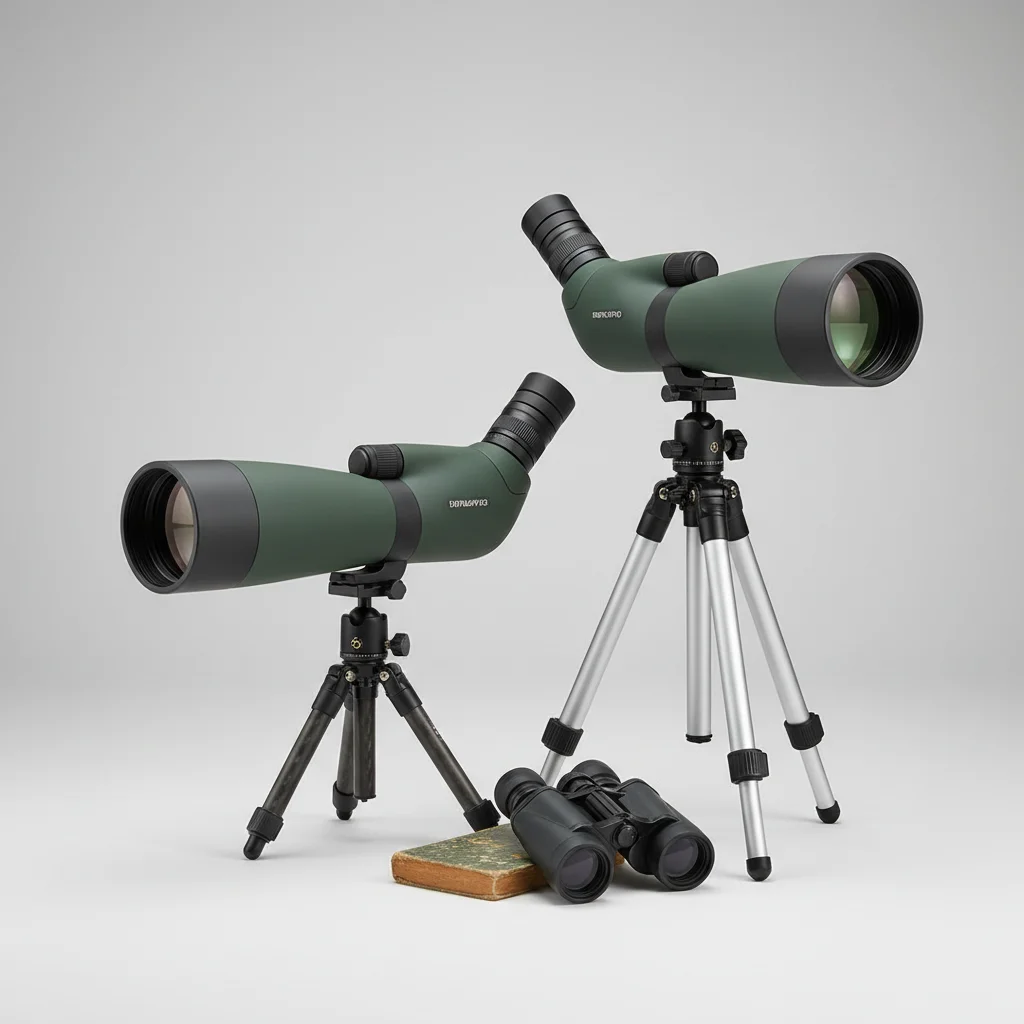
When choosing a spotting scope, one of the most fundamental decisions you’ll face is between an angled or a straight body design. Each configuration offers distinct advantages and disadvantages that impact user comfort, portability, and overall viewing experience. For most general outdoor enthusiasts, an angled spotting scope provides superior comfort during extended viewing sessions, especially when observing subjects at varying elevations.
Understanding Angled Spotting Scopes
Angled spotting scopes feature an eyepiece that is set at a 45-degree angle to the main body of the scope. This design allows for a more relaxed head position, as you typically look down into the eyepiece rather than straight through it. This is particularly beneficial when using a tall tripod or observing subjects on a hillside or in the sky. Birdwatchers, for instance, often prefer angled scopes because they can comfortably track birds in trees or in flight without craning their necks. For compare top spotting scopes on this site.
Another advantage of the angled design is its adaptability for users of different heights. Multiple people can share an angled scope on a tripod with minimal adjustment, as the eyepiece can be rotated to suit individual preferences. This also makes it easier to use from a seated position or when lying prone, offering greater versatility in various field conditions.
Exploring Straight Spotting Scopes
Straight spotting scopes, as the name suggests, have an eyepiece that is in line with the main body of the scope. This design is often favored for its intuitive aiming and quick target acquisition. When you look through a straight scope, you are essentially looking directly at your subject, which can feel more natural for some users, especially those transitioning from binoculars or riflescopes.
Hunters, particularly those who need to quickly spot and range targets, often prefer straight scopes. The direct line of sight can be advantageous for rapid target acquisition in dynamic situations. Additionally, straight scopes are generally considered more compact and easier to pack in certain bags or cases, as they lack the protruding angled eyepiece.
Comfort and Ergonomics in Detail
|
Our Picks for the Best Spotting Scope in 2026
As an Amazon Associate I earn from qualifying purchases.
|
||
| Num | Product | Action |
|---|---|---|
| 1 | 25-75x70 HD Spotting Scope with BAK4 Prism FMC Lens, IPX7 Floating Fully Waterproof Spotting Scopes for Target Shooting Birding Wildlife Viewing Stargazing, Tripod Phone Adapter Carrying Bag(Green) |

|
| 2 | SVBONY SV28 100mm Angled Spotting Scope for Target Shooting, 25-75x Spotter Scope with Tripod for Long Range Viewing, FMC HD Optics with Soft Carrying Case & Phone Adapter, Scopes for Birdwatching |
|
| 3 | Spotting Scope 20-60x60mm - Waterproof IPX7 Spotter Scope with Phone Adapter and Tripod, Portable for Bird Watching Wildlife observing and Hiking, Black |
|
| 4 | 25-75X60 Spotting Scope with 51in Tripod, Spotting Scope for Target Shooting, Hunting & Bird Watching, Low Light Vision, Phone Adapter, Carry Bag, BAK4 Prism, FMC Lens, Waterproof (ArmyGreen) |
|
| 5 | SVBONY SV28 20-60x80 New Version Spotting Scope for Target Shooting, Long Range Spotter Scope with Phone Adapter and Tripod, HD Scope for Bird Watching, Wildlife Observation |
|
| 6 | SVBONY SV28 Plus Spotting Scopes with Tripod, Angled Spotter Scope with Upgraded Phone Adapter, IP65 Waterproof Fogproof Long Range Spotting Scope for Target Shooting, Birding |
|
| 7 | High-Definition Spotting Scope for Bird Watching,Wildlife Viewing,Beginners Telescope,Target Observation.25-75×60mm HD Spotting Scope with Tripod and Phone Adapter,Monocular |
|
| 8 | Gosky Flagship 25-75x80 Spotting Scope - Spotting Scopes with Tripod, Carrying Bag and Quick Phone Holder BAK4 Waterproof Spotter Scope for Bird Watching Target Shooting,Upgraded Version |
|
| 9 | Gosky Flagship DiamondEdge 20-60x80 Spotting Scope with Tripod, Carrying Bag and Quick Phone Holder - BAK4 High Definition Waterproof Spotter Scope for Bird Watching Wildlife observing,Green |
|
| 10 | SVBONY SV28 Spotting Scopes with Tripod, Angled 25-75x70mm Spotter Scope with Phone Adapter, Waterproof Fogproof Spotting Scope for Bird Watching, Target Shooting, Wildlife Viewing |
|
The ergonomic differences between angled and straight scopes are significant. An angled scope reduces neck and back strain during prolonged observation. Imagine spending hours watching wildlife; with an angled scope, your head remains in a more natural, downward-looking position. This is a major factor for many users who prioritize comfort during long sessions. Conversely, a straight scope often requires you to bend or crane your neck, especially when the scope is mounted on a tall tripod or when viewing subjects high above you. This can lead to discomfort and fatigue over time.
However, straight scopes can be more comfortable in specific scenarios, such as when viewing from a vehicle window mount or when needing to quickly glance through the scope without repositioning your entire body. The choice often comes down to the primary use case and individual physical preferences.
Portability and Setup Considerations
When it comes to portability, both designs have their merits. Straight scopes are often perceived as more streamlined, potentially fitting into narrower compartments in backpacks or cases. Their linear form factor can make them slightly easier to handle and store. Angled scopes, while sometimes appearing bulkier due to the eyepiece angle, can actually be more compact in terms of overall length when packed, as the eyepiece doesn’t extend as far. The ability to rotate the eyepiece on an angled scope can also aid in packing efficiency.
Setting up an angled scope on a tripod can sometimes be quicker for multiple users or when viewing at extreme angles, as the eyepiece can be adjusted without moving the entire tripod. Straight scopes, on the other hand, might require more precise tripod height adjustments to achieve comfortable viewing for different individuals or viewing angles.
Key Factors for Your Decision
- Primary Use: Birdwatching, astronomy, or extended static observation often favor angled scopes for comfort. Hunting or quick target acquisition might lean towards straight scopes.
- Tripod Height: Taller tripods or viewing elevated subjects are more comfortable with an angled design.
- User Height: Angled scopes are more adaptable for multiple users of varying heights.
- Packing Preferences: Consider how the scope will fit into your existing gear and carrying solutions.
- Personal Comfort: Ultimately, try both if possible to see which feels more natural for your body and viewing style.
Ultimately, the best design for you depends on your specific needs and viewing habits. If comfort during long observation periods and versatility for different viewing angles are paramount, an angled spotting scope is likely the superior choice. Its ergonomic benefits for birdwatchers, astronomers, and general nature observers are significant. However, if rapid target acquisition and a more direct line of sight are critical, such as for certain hunting scenarios, a straight spotting scope might be more appropriate. Consider your typical viewing environment and how you intend to use the scope most often before making your final decision.Many users find that the initial learning curve for an angled scope is minimal, and the long-term comfort benefits far outweigh any perceived difficulty.

As an amateur astronomer, I can’t stress enough how much better an angled spotting scope is for sky observation. Looking down into the eyepiece is so much more natural than craning your neck with a straight scope. It’s made my stargazing sessions much more enjoyable and less physically demanding. Highly recommend for anyone looking up!
I was really torn between an angled and straight scope for birdwatching, but after reading up on it, I went with an angled design. It’s made such a difference for my neck, especially when I’m tracking birds high in trees or across a valley. The 45-degree eyepiece is a game-changer for comfort during long sessions. Definitely recommend for anyone serious about birding.
I got an angled scope for general outdoor use, mostly wildlife viewing. It’s comfortable, no doubt, but I’ve found it a bit awkward to share with friends who are much taller or shorter than me. Adjusting the tripod height constantly is a bit of a hassle. I might consider a straight scope next time for more versatility with different users.
I picked up an angled scope for target shooting, and while it’s great for comfort when I’m sitting, I do find it a little less intuitive to quickly acquire targets compared to a straight scope. The portability is good, but sometimes I wish I had gone with a straight one for faster setup. Still, for extended viewing, the angled design is superior.