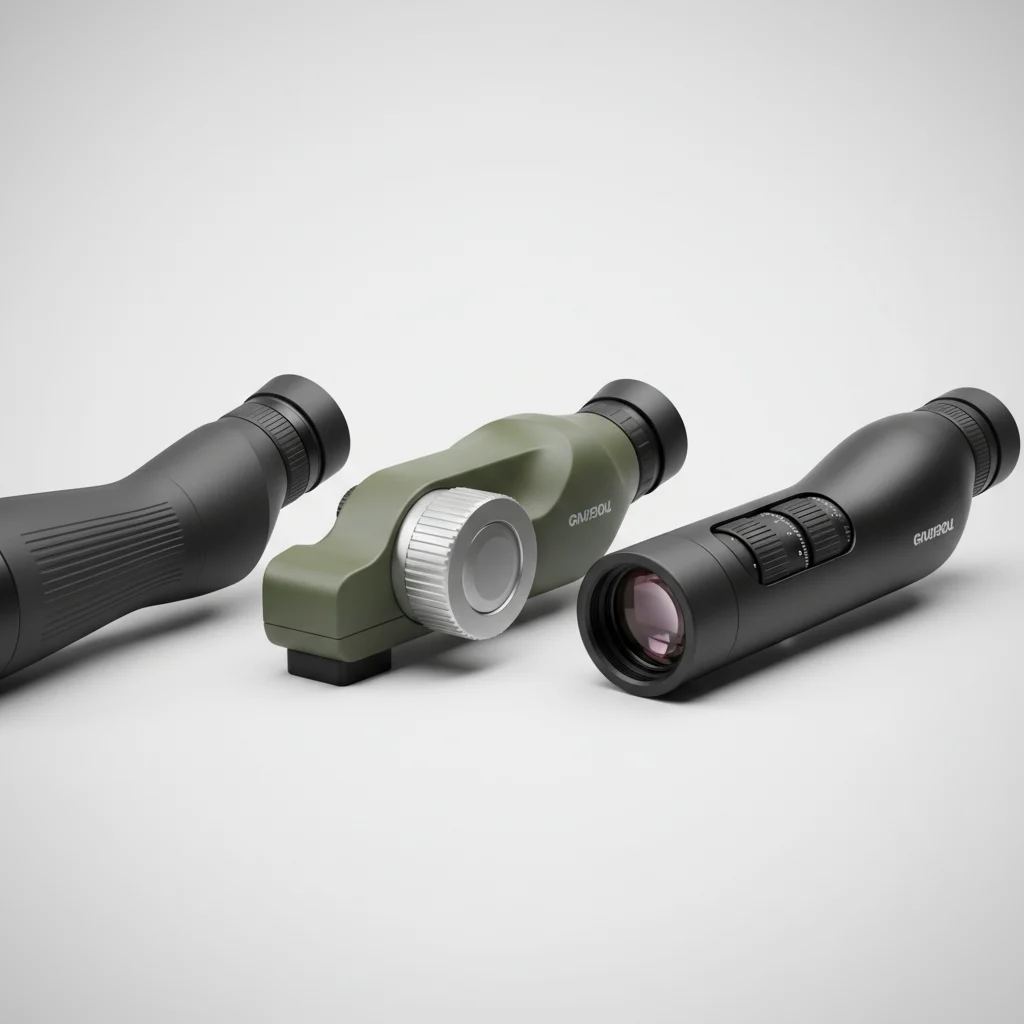
Spotting scope focus mechanisms are crucial for achieving a clear and sharp image, with two primary types dominating the market: helical and dual-speed focusers. While both aim to bring distant objects into crisp view, they differ significantly in their operation and precision. Understanding these differences is key to selecting a spotting scope that meets your specific viewing needs, whether for birding, target shooting, or astronomical observation.
Understanding Helical Focus Mechanisms
Helical focusers are often found on more compact or entry-level spotting scopes. This mechanism involves rotating a ring on the scope’s body, which moves the internal lens elements to achieve focus. The entire focusing range is typically covered within one or two full rotations of the ring. This design is robust and less prone to external damage, making it a reliable choice for rugged outdoor use. However, the trade-off can be a less precise adjustment, as a small rotation can result in a significant change in focus, making fine-tuning more challenging.
Despite the potential for less precision, helical focusers are generally smooth and consistent. They are particularly well-suited for situations where rapid focusing is more important than minute adjustments, such as quickly acquiring a moving target or scanning a wide landscape. The simplicity of the design also contributes to their durability and often a lower manufacturing cost, which can translate to more affordable spotting scopes.
Exploring Dual-Speed Focus Mechanisms
Dual-speed focus mechanisms, also known as coarse and fine focus, represent the pinnacle of focusing precision in spotting scopes. This system typically features two separate knobs: a larger one for rapid, coarse adjustments and a smaller one for minute, fine-tuning. The coarse knob quickly brings the image into general focus, while the fine knob allows for incredibly precise adjustments, often with a gear ratio that provides a much slower movement of the lens elements per rotation. This allows users to achieve an exceptionally sharp image, even at high magnifications.
The advantage of dual-speed focusers is most apparent in situations demanding critical sharpness, such as digiscoping, long-range target shooting, or detailed wildlife observation. The ability to make subtle adjustments minimizes the risk of overshooting the perfect focus point. While these mechanisms are generally more complex and can add to the cost and weight of a spotting scope, the enhanced control over image clarity is often considered a worthwhile investment by serious users.
Comparing Precision and Speed
|
Our Picks for the Best Spotting Scope in 2026
As an Amazon Associate I earn from qualifying purchases.
|
||
| Num | Product | Action |
|---|---|---|
| 1 | SVBONY SV28 100mm Angled Spotting Scope for Target Shooting, 25-75x Spotter Scope with Tripod for Long Range Viewing, FMC HD Optics with Soft Carrying Case & Phone Adapter, Scopes for Birdwatching |

|
| 2 | Gosky Flagship 25-75x80 Spotting Scope - Spotting Scopes with Tripod, Carrying Bag and Quick Phone Holder BAK4 Waterproof Spotter Scope for Bird Watching Target Shooting,Upgraded Version |
|
| 3 | SVBONY SV28 Spotting Scopes with Tripod, Angled 25-75x70mm Spotter Scope with Phone Adapter, Waterproof Fogproof Spotting Scope for Bird Watching, Target Shooting, Wildlife Viewing |
|
| 4 | 25-75x70 HD Spotting Scope with BAK4 Prism FMC Lens, IPX7 Floating Fully Waterproof Spotting Scopes for Target Shooting Birding Wildlife Viewing Stargazing, Tripod Phone Adapter Carrying Bag(Green) |
|
| 5 | SVBONY SV28 Plus Spotting Scopes with Tripod, Angled Spotter Scope with Upgraded Phone Adapter, IP65 Waterproof Fogproof Long Range Spotting Scope for Target Shooting, Birding |
|
| 6 | Spotting Scope 20-60x60mm - Waterproof IPX7 Spotter Scope with Phone Adapter and Tripod, Portable for Bird Watching Wildlife observing and Hiking, Black |
|
| 7 | SVBONY SV28 20-60x80 New Version Spotting Scope for Target Shooting, Long Range Spotter Scope with Phone Adapter and Tripod, HD Scope for Bird Watching, Wildlife Observation |
|
| 8 | 25-75X60 Spotting Scope with 51in Tripod, Spotting Scope for Target Shooting, Hunting & Bird Watching, Low Light Vision, Phone Adapter, Carry Bag, BAK4 Prism, FMC Lens, Waterproof (ArmyGreen) |
|
| 9 | Gosky Flagship DiamondEdge 20-60x80 Spotting Scope with Tripod, Carrying Bag and Quick Phone Holder - BAK4 High Definition Waterproof Spotter Scope for Bird Watching Wildlife observing,Green |
|
| 10 | High-Definition Spotting Scope for Bird Watching,Wildlife Viewing,Beginners Telescope,Target Observation.25-75×60mm HD Spotting Scope with Tripod and Phone Adapter,Monocular |
|
When comparing helical and dual-speed focus mechanisms, precision and speed are the primary differentiating factors. Helical focusers excel in speed and simplicity, allowing for quick adjustments across the entire focal range. This makes them ideal for dynamic viewing scenarios where subjects may move quickly or when you need to scan different distances rapidly. Their robust nature also makes them a good fit for harsh environments.
Dual-speed focusers, on the other hand, prioritize precision. The separate fine-tuning knob provides an unparalleled level of control, enabling users to achieve the sharpest possible image, which is critical for detailed observation and photography. While they may take slightly longer to initially acquire focus, the resulting clarity is often superior. The choice between the two largely depends on your primary use case and the level of detail you require.
Maintenance and Durability Considerations
Both helical and dual-speed focus mechanisms are designed for durability, but their internal complexities can influence maintenance. Helical focusers, with fewer moving parts, are generally less susceptible to dust and moisture ingress, making them quite resilient in challenging outdoor conditions. Regular cleaning of the exterior focusing ring is usually sufficient to maintain smooth operation.
Dual-speed focusers, while robust, have more intricate internal gearing. This can potentially make them more vulnerable to extreme impacts or prolonged exposure to fine dust if not properly sealed. However, reputable manufacturers design these mechanisms with excellent sealing to protect the internal components. Proper care, including keeping the focus knobs clean and free of debris, will ensure their longevity and continued smooth performance. Consider a protective case for your scope, especially if it features a dual-speed focuser, to safeguard its precision components.
Which Mechanism is Right for You?
Choosing the right spotting scope focus mechanism depends entirely on your specific needs and budget. For casual observers, hunters needing quick target acquisition, or those on a tighter budget, a helical focuser offers excellent value and reliable performance. It’s a straightforward system that gets the job done effectively.
- Helical Focus: Best for speed, durability, and budget-conscious users.
- Dual-Speed Focus: Ideal for precision, detailed observation, and digiscoping.
- Consider your primary activity: Birding often benefits from dual-speed for fine feather detail.
- Environmental factors: Helical might be more forgiving in very dusty or wet conditions.
- Budget: Dual-speed scopes generally come at a higher price point.
For serious enthusiasts, digiscopers, or anyone who demands the absolute sharpest image and is willing to invest in superior optical control, a dual-speed focuser is the clear winner. The ability to fine-tune focus to such a degree can significantly enhance your viewing experience and the quality of any captured images. Ultimately, both mechanisms serve their purpose well, but understanding their nuances will guide you to the best choice for your outdoor adventures.
