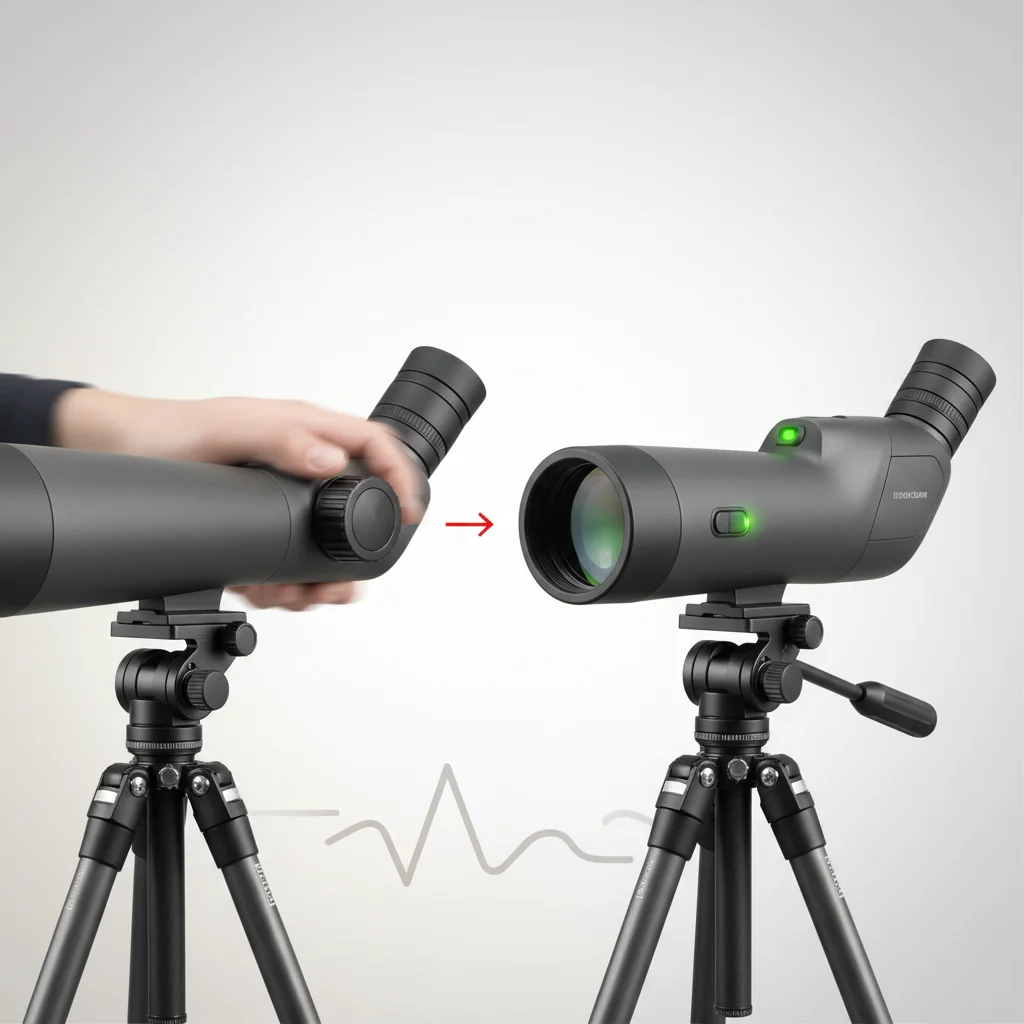
Spotting scope focusing speed significantly impacts your viewing experience, especially when tracking moving subjects or making rapid adjustments. While not always the primary consideration, a scope with a responsive and smooth focusing mechanism can mean the difference between capturing a fleeting moment and missing it entirely. The ideal speed often depends on the user’s application, with faster mechanisms preferred for dynamic observations like birding or wildlife viewing, and finer, slower adjustments favored for static, high-precision tasks such as target shooting.
Understanding Focusing Mechanisms and Their Speed
The speed and precision of a spotting scope’s focus are largely determined by its internal focusing mechanism. Most scopes utilize either a single-speed or a dual-speed focus system. Single-speed systems offer a straightforward approach, where one knob controls all focusing adjustments. While simpler, these can sometimes be too fast for fine-tuning or too slow for large adjustments, depending on the gear ratio. Dual-speed systems, on the other hand, incorporate two knobs: one for coarse, rapid adjustments and another for fine, precise focusing. This combination provides superior control, allowing users to quickly get close to the target and then meticulously sharpen the image. For more spotting scopes guides on this site.
The quality of the internal components, including the lubricants and the precision of the machining, also plays a crucial role. Smoother, well-engineered mechanisms will offer less resistance and more consistent movement, contributing to a faster and more enjoyable focusing experience. Conversely, scopes with stiff or imprecise mechanisms can lead to frustration and missed opportunities.
Impact of Focusing Speed on Different Activities
For birdwatchers and wildlife enthusiasts, rapid focusing is paramount. Animals rarely stay still for long, and the ability to quickly acquire and sharpen an image of a moving subject is invaluable. A scope with a fast, responsive focus allows observers to follow birds in flight or track animals through dense foliage without losing the subject. Conversely, a slow focusing mechanism can lead to blurry views and missed identification opportunities.
Target shooters, while also valuing precision, often prioritize fine adjustments over sheer speed. Once a target is acquired, the ability to make minute adjustments to achieve the sharpest possible image is critical for accuracy. However, even in target shooting, the initial acquisition of the target benefits from a reasonably quick coarse focus. The balance between speed and precision is key, making dual-speed focus systems particularly popular in this discipline.
Factors Influencing Focusing Speed Performance
|
Our Picks for the Best Spotting Scope in 2026
As an Amazon Associate I earn from qualifying purchases.
|
||
| Num | Product | Action |
|---|---|---|
| 1 | 25-75X60 Spotting Scope with 51in Tripod, Spotting Scope for Target Shooting, Hunting & Bird Watching, Low Light Vision, Phone Adapter, Carry Bag, BAK4 Prism, FMC Lens, Waterproof (ArmyGreen) |

|
| 2 | Gosky Flagship DiamondEdge 20-60x80 Spotting Scope with Tripod, Carrying Bag and Quick Phone Holder - BAK4 High Definition Waterproof Spotter Scope for Bird Watching Wildlife observing,Green |
|
| 3 | SVBONY SV28 100mm Angled Spotting Scope for Target Shooting, 25-75x Spotter Scope with Tripod for Long Range Viewing, FMC HD Optics with Soft Carrying Case & Phone Adapter, Scopes for Birdwatching |
|
| 4 | High-Definition Spotting Scope for Bird Watching,Wildlife Viewing,Beginners Telescope,Target Observation.25-75×60mm HD Spotting Scope with Tripod and Phone Adapter,Monocular |
|
| 5 | Gosky Flagship 25-75x80 Spotting Scope - Spotting Scopes with Tripod, Carrying Bag and Quick Phone Holder BAK4 Waterproof Spotter Scope for Bird Watching Target Shooting,Upgraded Version |
|
| 6 | Spotting Scope 20-60x60mm - Waterproof IPX7 Spotter Scope with Phone Adapter and Tripod, Portable for Bird Watching Wildlife observing and Hiking, Black |
|
| 7 | 25-75x70 HD Spotting Scope with BAK4 Prism FMC Lens, IPX7 Floating Fully Waterproof Spotting Scopes for Target Shooting Birding Wildlife Viewing Stargazing, Tripod Phone Adapter Carrying Bag(Green) |
|
| 8 | SVBONY SV28 Plus Spotting Scopes with Tripod, Angled Spotter Scope with Upgraded Phone Adapter, IP65 Waterproof Fogproof Long Range Spotting Scope for Target Shooting, Birding |
|
| 9 | SVBONY SV28 20-60x80 New Version Spotting Scope for Target Shooting, Long Range Spotter Scope with Phone Adapter and Tripod, HD Scope for Bird Watching, Wildlife Observation |
|
| 10 | SVBONY SV28 Spotting Scopes with Tripod, Angled 25-75x70mm Spotter Scope with Phone Adapter, Waterproof Fogproof Spotting Scope for Bird Watching, Target Shooting, Wildlife Viewing |
|
Several factors beyond the mechanism itself can influence the perceived focusing speed. Environmental conditions, such as extreme cold, can thicken lubricants, making the focus knob stiffer and slower to turn. Dust and debris can also impede smooth operation. Regular maintenance and cleaning are essential to ensure optimal performance. Furthermore, the user’s technique and familiarity with their specific scope can impact how quickly and effectively they can achieve focus. Practice and understanding the scope’s nuances will always improve focusing efficiency.
- Gear Ratio: A higher gear ratio on a single-speed system means more turns for a given focus change, potentially slowing down large adjustments.
- Lubrication Quality: High-quality, temperature-stable lubricants ensure smooth operation across various conditions.
- Ergonomics of Knobs: Well-designed, easy-to-grip focus knobs allow for quicker and more comfortable adjustments.
- Internal Construction: Precision-machined components reduce friction and play, leading to smoother, faster focusing.
- Environmental Factors: Temperature and humidity can affect the fluidity of the focusing mechanism.
Choosing the Right Focusing Speed for Your Needs
When selecting a spotting scope, consider your primary use case. If you frequently observe fast-moving subjects, prioritize models with dual-speed focus systems or single-speed systems known for their rapid, yet smooth, operation. Look for reviews that specifically mention focusing speed and ease of use. For static observation or precision tasks, a scope with a very fine focus adjustment, even if slightly slower overall, might be more beneficial. Ultimately, the best focusing speed is one that allows you to achieve a sharp image quickly and comfortably, without frustration.
Maintaining Optimal Focusing Speed
To ensure your spotting scope maintains its optimal focusing speed and smoothness over time, proper maintenance is crucial. Keep the scope clean, especially around the focus mechanism, to prevent dust and grit from accumulating. Store it in a protective case when not in use to shield it from environmental contaminants. Avoid exposing the scope to extreme temperatures for prolonged periods, as this can affect internal lubricants. If you notice any stiffness or grinding in the focus mechanism, it’s often best to consult the manufacturer or a professional repair service rather than attempting to lubricate or disassemble it yourself, as this could void warranties or cause further damage.

I got a new scope recently, and while the image quality is great, the focusing mechanism feels a bit stiff. It’s a single-speed system, and I find myself overshooting the focus sometimes, especially when I’m trying to quickly adjust for different distances. It’s not a dealbreaker, but it does slow me down a bit when I’m out in the field.
I’ve been using a single-speed focus system for years and always thought it was fine, but after reading about the benefits of dual-speed, I upgraded. What a difference! Tracking birds in flight is so much smoother now. I can get a sharp image almost instantly, which is crucial for those quick moments.
I primarily use my spotting scope for target shooting, and I appreciate the emphasis on finer, slower adjustments for high-precision tasks. My current scope has a good balance, but I’m considering one of the higher-end models mentioned for even more precise focusing. It really does make a difference when you’re trying to dial in a shot at long range.
For wildlife viewing, a responsive and smooth focusing mechanism is non-negotiable. My old scope was always a struggle, but my new one, which has a much faster focus, has completely changed my experience. I’m catching so many more details of animals in motion. It’s worth investing in a good system.