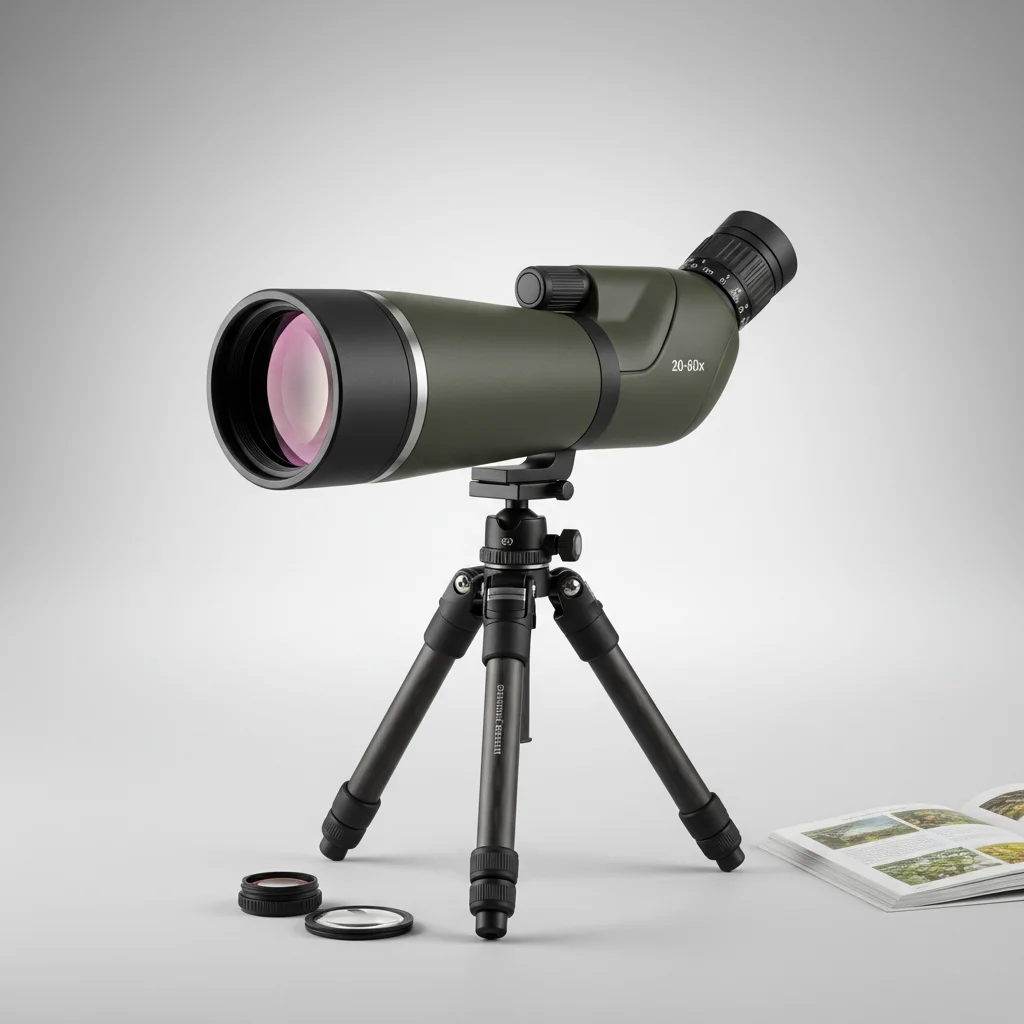
For most hunting scenarios, a spotting scope with a magnification range of 20-60x is ideal, offering a versatile balance between field of view and detailed observation. This range allows hunters to effectively glass vast areas for game and then zoom in to assess trophy quality or shot placement at longer distances. While higher magnifications exist, they often come with reduced light gathering and increased susceptibility to mirage, making them less practical for typical hunting conditions.
Understanding Magnification and Objective Lens Diameter
Magnification, often expressed as a range (e.g., 20-60x), indicates how many times closer an object appears. The objective lens diameter, measured in millimeters (e.g., 80mm), determines how much light the scope can gather. A larger objective lens generally provides a brighter image, especially in low-light conditions. For hunting, a good balance is crucial; a 20-60x80mm scope is a popular choice as it offers both significant magnification and excellent light transmission.
Consider the terrain and typical distances you hunt. For open plains or mountain hunting where long-range glassing is common, a higher magnification on the upper end of the 60x range can be beneficial. For denser forests or shorter distances, a lower magnification might suffice, offering a wider field of view to track moving animals.
Factors Influencing Your Magnification Choice
Several factors should guide your decision beyond just the numbers. Weather conditions, particularly heat haze or mirage, can significantly degrade image quality at higher magnifications. A stable tripod is also non-negotiable for any magnification above 15-20x to prevent image shake and ensure clear viewing. Your personal vision and comfort also play a role; some hunters find sustained viewing at very high magnifications fatiguing.
- Hunting Distance: Longer distances require higher magnification for detailed observation.
- Light Conditions: Lower light benefits from larger objective lenses and can be hindered by excessively high magnification.
- Stability: A robust tripod is essential for clear images at higher magnifications.
- Mirage: Atmospheric conditions can limit the effective use of very high magnifications.
- Target Size: Smaller targets at long range necessitate more magnification.
Optimal Magnification for Different Game
|
Our Picks for the Best Spotting Scope in 2026
As an Amazon Associate I earn from qualifying purchases.
|
||
| Num | Product | Action |
|---|---|---|
| 1 | SVBONY SV28 Plus Spotting Scopes with Tripod, Angled Spotter Scope with Upgraded Phone Adapter, IP65 Waterproof Fogproof Long Range Spotting Scope for Target Shooting, Birding |

|
| 2 | SVBONY SV28 20-60x80 New Version Spotting Scope for Target Shooting, Long Range Spotter Scope with Phone Adapter and Tripod, HD Scope for Bird Watching, Wildlife Observation |
|
| 3 | SVBONY SV28 100mm Angled Spotting Scope for Target Shooting, 25-75x Spotter Scope with Tripod for Long Range Viewing, FMC HD Optics with Soft Carrying Case & Phone Adapter, Scopes for Birdwatching |
|
| 4 | 25-75X60 Spotting Scope with 51in Tripod, Spotting Scope for Target Shooting, Hunting & Bird Watching, Low Light Vision, Phone Adapter, Carry Bag, BAK4 Prism, FMC Lens, Waterproof (ArmyGreen) |
|
| 5 | SVBONY SV28 Spotting Scopes with Tripod, Angled 25-75x70mm Spotter Scope with Phone Adapter, Waterproof Fogproof Spotting Scope for Bird Watching, Target Shooting, Wildlife Viewing |
|
| 6 | Spotting Scope 20-60x60mm - Waterproof IPX7 Spotter Scope with Phone Adapter and Tripod, Portable for Bird Watching Wildlife observing and Hiking, Black |
|
| 7 | Gosky Flagship 25-75x80 Spotting Scope - Spotting Scopes with Tripod, Carrying Bag and Quick Phone Holder BAK4 Waterproof Spotter Scope for Bird Watching Target Shooting,Upgraded Version |
|
| 8 | 25-75x70 HD Spotting Scope with BAK4 Prism FMC Lens, IPX7 Floating Fully Waterproof Spotting Scopes for Target Shooting Birding Wildlife Viewing Stargazing, Tripod Phone Adapter Carrying Bag(Green) |
|
| 9 | High-Definition Spotting Scope for Bird Watching,Wildlife Viewing,Beginners Telescope,Target Observation.25-75×60mm HD Spotting Scope with Tripod and Phone Adapter,Monocular |
|
| 10 | Gosky Flagship DiamondEdge 20-60x80 Spotting Scope with Tripod, Carrying Bag and Quick Phone Holder - BAK4 High Definition Waterproof Spotter Scope for Bird Watching Wildlife observing,Green |
|
The type of game you pursue also influences the ideal spotting scope magnification. For elk and deer hunting in open country, a 20-60x range is highly effective for spotting and evaluating animals at several hundred yards. For smaller game or bird hunting where fine detail is paramount, you might lean towards the higher end of that range, or even consider a fixed 30x or 40x scope for simplicity and often superior optical quality at that specific power.
Conversely, if you primarily hunt in dense timber where shots are close and quick target acquisition is key, a lower magnification (e.g., 15-45x) might be more practical, offering a wider field of view to scan for movement. Always prioritize clarity and brightness over raw magnification, as a clear 40x view is far more useful than a blurry 60x view.
When to Consider Higher or Lower Magnification
While 20-60x is a strong general recommendation, there are niche cases for deviating. For extreme long-range shooting or very specific observation tasks where targets are static and atmospheric conditions are ideal, a scope with an 80x or even 100x top end might be considered. However, these are specialized tools and often come with significant trade-offs in terms of weight, cost, and usability in varied field conditions.
On the other hand, if portability and a wide field of view are your absolute top priorities, and your hunting distances are consistently shorter, a compact spotting scope with a 15-45x magnification might be a better fit. These scopes are lighter and easier to pack, making them suitable for fast-paced hunts where every ounce counts. Always test different magnifications if possible to find what feels most comfortable and effective for your specific hunting style.
Frequently Asked Questions
What is the ideal magnification range for a hunting spotting scope?
The ideal magnification range for most hunting scenarios is 20-60x. This range provides a versatile balance, allowing hunters to effectively glass large areas and then zoom in for detailed observation of game at longer distances.
How does objective lens diameter affect a spotting scope's performance?
The objective lens diameter, measured in millimeters, determines how much light the scope can gather. A larger objective lens, such as 80mm, generally provides a brighter image, which is especially beneficial in low-light conditions during hunting.
What factors should influence my choice of spotting scope magnification?
Several factors influence magnification choice, including hunting distance, light conditions, the need for a stable tripod, atmospheric mirage, and the size of your target. For instance, longer distances and smaller targets require higher magnification.
Is a higher magnification always better for hunting spotting scopes?
No, a higher magnification is not always better. While it offers more detail, it can reduce light gathering, increase susceptibility to mirage, and often requires a very stable tripod. A clear 40x view is often more useful than a blurry 60x view.
When should I consider a compact spotting scope with lower magnification?
You should consider a compact spotting scope with a 15-45x magnification if portability and a wide field of view are top priorities, and your hunting distances are consistently shorter. These scopes are lighter and easier to pack for fast-paced hunts.

Finally upgraded my old scope, and the difference is night and day. The versatility of the 20-60x range is perfect for my varied hunting spots, from open fields to denser woods. I can easily assess trophy quality from a distance, which saves a lot of unnecessary walking. This magnification truly offers the best balance.
My new spotting scope with an 80mm objective lens has been a game-changer for early morning and late evening glassing. The image brightness, even in low light, is impressive. I can really pick out details that my old scope just couldn’t resolve. It’s a bit heavier to pack, but the clarity makes it worth it for those crucial times.
I picked up a scope with a higher magnification than the 20-60x range, thinking more power would be better. While it’s great for really long distances, the mirage effect can be pretty annoying on warmer days. I also noticed a significant drop in brightness compared to my friend’s scope with a smaller magnification. Wish I’d stuck to the recommended range.
I’ve been using a 20-60x magnification scope for deer hunting for years, and it’s exactly what I needed. The ability to scan a wide area and then zoom in to check antler points without spooking anything is invaluable. It really hits that sweet spot between field of view and detailed observation, just like mentioned. Definitely recommend this range for serious hunters.