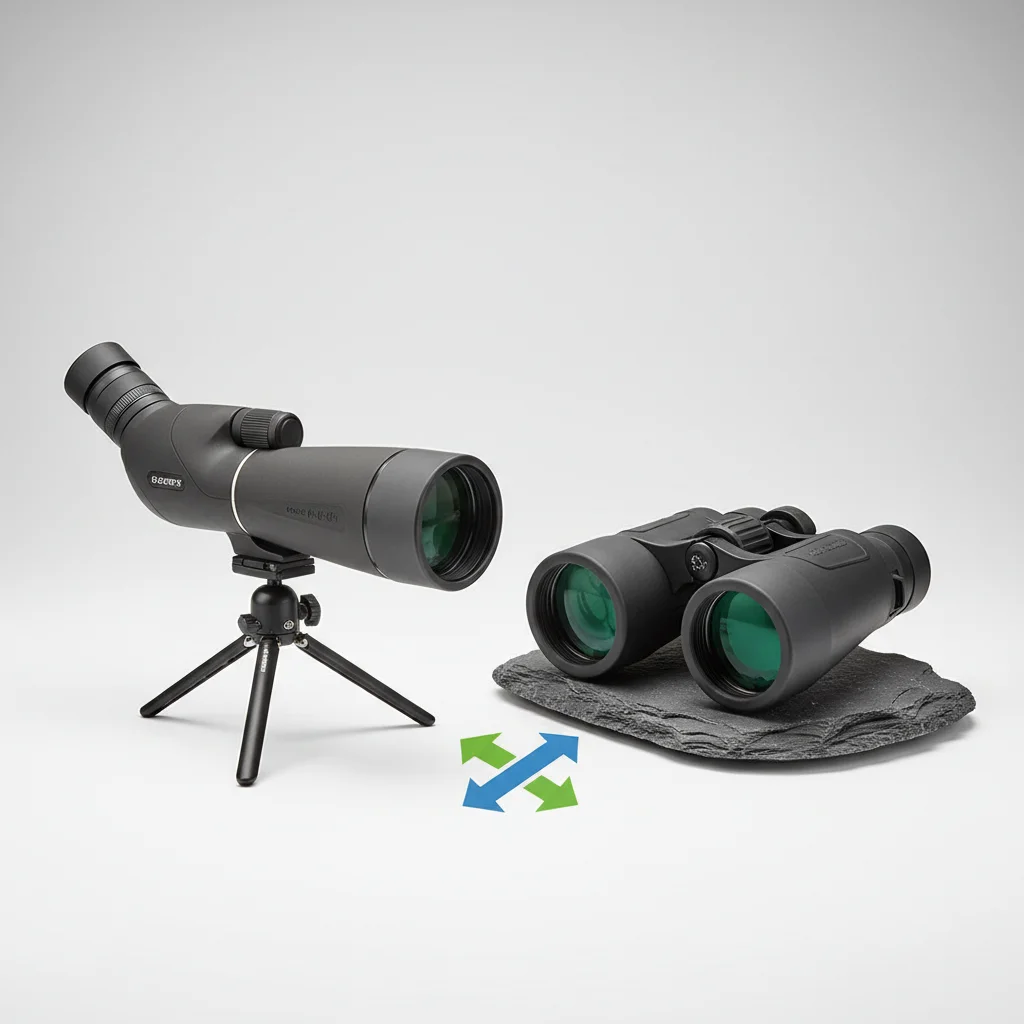
For long-range viewing beyond 500 yards, a spotting scope is generally superior to binoculars due to its higher magnification and ability to resolve fine details. While binoculars offer portability and a wider field of view for closer to mid-ranges, spotting scopes typically provide 20-60x magnification compared to binoculars’ effective maximum of 15-20x, making them ideal for precision tasks like target shooting or detailed birdwatching at extreme distances.
Understanding Magnification and Clarity
The primary distinction between spotting scopes and binoculars lies in their optical design and intended use. Spotting scopes are monocular instruments engineered for high magnification, often featuring larger objective lenses that gather more light, resulting in brighter and clearer images at extreme ranges. This makes them ideal for activities such as target shooting, serious birdwatching, and astronomical observation where identifying fine details from afar is crucial. Binoculars, conversely, provide a stereoscopic view, which is more comfortable for prolonged viewing and offers better depth perception, but at lower magnifications.
Regarding clarity, a spotting scope’s larger objective lens and often superior glass quality (e.g., ED or APO glass) contribute to reduced chromatic aberration and enhanced resolution. This allows users to discern finer details, such as bullet holes on a target at 300 yards or the subtle markings on a distant bird, with significantly greater precision than with even high-end binoculars.
Field of View and Portability Considerations
Binoculars typically offer a wider field of view, which is advantageous for scanning large areas and tracking moving subjects. Their compact size and lighter weight also make them significantly more portable, ideal for hiking, casual birding, or any situation requiring quick, handheld observation. Spotting scopes, due to their higher magnification, inherently have a narrower field of view, making initial subject location more challenging. They also necessitate a sturdy tripod for stable viewing, which adds to the overall bulk and setup time.
For activities where quick subject acquisition and tracking are essential, such as observing wildlife in motion, binoculars are often preferred. However, once a subject is located and detailed examination is required, the spotting scope excels.
Optimal Use Cases for Each Optic
|
Our Picks for the Best Spotting Scope in 2026
As an Amazon Associate I earn from qualifying purchases.
|
||
| Num | Product | Action |
|---|---|---|
| 1 | High-Definition Spotting Scope for Bird Watching,Wildlife Viewing,Beginners Telescope,Target Observation.25-75×60mm HD Spotting Scope with Tripod and Phone Adapter,Monocular |

|
| 2 | SVBONY SV28 20-60x80 New Version Spotting Scope for Target Shooting, Long Range Spotter Scope with Phone Adapter and Tripod, HD Scope for Bird Watching, Wildlife Observation |
|
| 3 | SVBONY SV28 Spotting Scopes with Tripod, Angled 25-75x70mm Spotter Scope with Phone Adapter, Waterproof Fogproof Spotting Scope for Bird Watching, Target Shooting, Wildlife Viewing |
|
| 4 | Gosky Flagship DiamondEdge 20-60x80 Spotting Scope with Tripod, Carrying Bag and Quick Phone Holder - BAK4 High Definition Waterproof Spotter Scope for Bird Watching Wildlife observing,Green |
|
| 5 | Gosky Flagship 25-75x80 Spotting Scope - Spotting Scopes with Tripod, Carrying Bag and Quick Phone Holder BAK4 Waterproof Spotter Scope for Bird Watching Target Shooting,Upgraded Version |
|
| 6 | 25-75X60 Spotting Scope with 51in Tripod, Spotting Scope for Target Shooting, Hunting & Bird Watching, Low Light Vision, Phone Adapter, Carry Bag, BAK4 Prism, FMC Lens, Waterproof (ArmyGreen) |
|
| 7 | 25-75x70 HD Spotting Scope with BAK4 Prism FMC Lens, IPX7 Floating Fully Waterproof Spotting Scopes for Target Shooting Birding Wildlife Viewing Stargazing, Tripod Phone Adapter Carrying Bag(Green) |
|
| 8 | Spotting Scope 20-60x60mm - Waterproof IPX7 Spotter Scope with Phone Adapter and Tripod, Portable for Bird Watching Wildlife observing and Hiking, Black |
|
| 9 | SVBONY SV28 100mm Angled Spotting Scope for Target Shooting, 25-75x Spotter Scope with Tripod for Long Range Viewing, FMC HD Optics with Soft Carrying Case & Phone Adapter, Scopes for Birdwatching |
|
| 10 | SVBONY SV28 Plus Spotting Scopes with Tripod, Angled Spotter Scope with Upgraded Phone Adapter, IP65 Waterproof Fogproof Long Range Spotting Scope for Target Shooting, Birding |
|
Choosing the right optic depends on your primary activity. For hunters needing to glass vast landscapes for game at varying distances, a good pair of 10x or 12x binoculars might be suitable for initial scanning, complemented by a spotting scope for detailed assessment of a potential target. For competitive long-range shooters, a spotting scope is indispensable for calling shots and making adjustments. Birdwatchers focused on identifying specific species from a distance will also find the higher magnification of a spotting scope invaluable.
- Target shooting at distances over 200 yards
- Serious bird identification and observation
- Hunting for detailed game assessment
- Entry-level astronomical viewing
- Surveillance and long-distance observation
Cost and Investment
Generally, a high-quality spotting scope represents a more significant investment than a comparable pair of binoculars, especially when considering the necessary tripod. However, the performance gains in magnification and detail at long ranges often justify the cost for dedicated users. Budget-friendly options exist for both, but the performance gap at the lower end of the price spectrum can be quite pronounced. Consider your budget and how frequently you will use the optic for long-range tasks.
The decision between a spotting scope and binoculars is not always an either/or. Many outdoor enthusiasts and professionals utilize both, leveraging the strengths of each for different aspects of their activities. For unparalleled detail at extreme distances, the spotting scope is the clear winner. For versatility, portability, and a wider field of view at closer ranges, binoculars take the lead.
Frequently Asked Questions
What is the main difference between a spotting scope and binoculars?
The main difference is magnification and intended use. Spotting scopes are monocular, designed for very high magnification (20-60x or more) and detailed observation at extreme distances, while binoculars are stereoscopic, offering lower magnification (typically up to 15-20x) for wider fields of view and portability.
Which optic provides better clarity for distant objects?
A spotting scope generally provides better clarity for distant objects. Its larger objective lens and often superior glass quality (e.g., ED or APO glass) reduce chromatic aberration and enhance resolution, allowing for finer detail discernment at ranges like 300 yards.
Are binoculars more portable than spotting scopes?
Yes, binoculars are significantly more portable than spotting scopes. Their compact size and lighter weight make them ideal for handheld use and activities like hiking, whereas spotting scopes require a sturdy tripod for stable viewing, adding to their bulk.
For what activities are spotting scopes most suitable?
Spotting scopes are most suitable for activities requiring extreme magnification and detailed observation at long ranges. These include target shooting at distances over 200 yards, serious bird identification, detailed game assessment during hunting, and entry-level astronomical viewing.
Is it worth investing in both a spotting scope and binoculars?
For many outdoor enthusiasts and professionals, investing in both a spotting scope and binoculars is worthwhile. This allows users to leverage the portability and wide field of view of binoculars for initial scanning, and the high magnification and detail of a spotting scope for precise examination of distant subjects.

I’ve been using binoculars for years for birdwatching, but I finally decided to upgrade after reading about the magnification differences. This spotting scope is a game-changer for identifying raptors at extreme distances. The clarity at 60x is just incredible, letting me see details I’d never catch before. Definitely worth the investment for serious birders.
I was hoping this would replace my binoculars for all my outdoor activities, but I’m finding the field of view a bit too narrow for tracking moving animals up close. It’s great for stationary objects at long range, like distant wildlife, but for anything closer or moving quickly, I still reach for my binos. The 20x magnification is good, but it’s not as versatile as I’d hoped.
As an astronomy enthusiast, I was looking for something to complement my telescope for daytime viewing. This spotting scope is perfect for observing lunar features or distant landscapes with incredible detail. The larger objective lens really makes a difference in light gathering, providing crisp, clear images even when zoomed in. Highly recommend for anyone needing precision viewing.
I got this for target shooting and it’s been fantastic for seeing bullet holes at 500 yards. The image is super bright even in lower light conditions, which is a huge plus. My only minor gripe is that it’s a bit heavier than I expected, making it less convenient to haul around on long treks. Still, the performance makes up for it.