Maintaining crystal-clear optics is paramount for any spotting scope enthusiast, whether you’re a seasoned birder, an avid hunter, or a passionate astrophotographer. Over time, dust, fingerprints, and smudges inevitably accumulate, hindering your view and potentially damaging delicate lens coatings. While professional cleaning is always an option, knowing how to safely clean your spotting scope lenses at home can save you time and money, ensuring your valuable equipment delivers peak performance for years to come. This comprehensive guide will walk you through the essential tools, proper techniques, and critical precautions to take, empowering you to keep your spotting scope’s optics pristine without causing harm.
Why Proper Spotting Scope Lens Cleaning Matters
The clarity of your spotting scope’s lenses directly impacts the quality of your viewing experience. Even minor smudges or dust particles can degrade image resolution, reduce brightness, and obscure fine details, diminishing the very purpose of your optical device. More importantly, improper cleaning techniques pose a significant risk, potentially leading to irreversible scratches on delicate lens coatings or the glass itself. These coatings are crucial for light transmission and glare reduction, and any damage can permanently impair your scope’s performance. Cleaning should only be undertaken when visibility is genuinely affected, as excessive cleaning increases the risk of damage. Dust on the eyepiece, which is closer to your eye, tends to be more noticeable and may require more frequent attention than dust on the objective lens.
Essential Tools and Supplies for a Safe Clean
Before you begin, gather the right tools. Using inappropriate materials can cause more harm than good to your precision optics. Here’s what you’ll need for a safe and effective lens cleaning process:
- Air Blower Bulb: A manual air blower, like a Giottos Rocket Air Blaster, is essential for dislodging loose dust and debris without touching the lens surface. Avoid canned compressed air, as it can contain propellants that leave residue or spray too forcefully.
- Soft Lens Brush: A dedicated soft-bristled lens brush or a lens pen with a retractable brush is perfect for gently sweeping away finer particles. Ensure it is clean and free of oils or grit before use.
- Lint-Free Microfiber Lens Cloths: High-quality, clean microfiber cloths designed specifically for optics are crucial. Keep them separate from other cleaning cloths to prevent contamination with dirt or oils. Always use a fresh, clean section of the cloth for each wipe.
- Optical Cleaning Solutions:
- Dedicated Lens Cleaning Fluid: The safest option, specifically formulated for optical surfaces.
- Distilled Water: A good alternative for general grime, as it leaves no mineral deposits.
- 90%+ Isopropyl Alcohol: Can be used sparingly for stubborn oils or grease, as it dries quickly and leaves minimal residue.
- Mild Dish Soap (diluted): In a pinch, a very mild, highly diluted dish soap solution can tackle greasy marks, but ensure it’s rinsed completely.
> “Always start with the least intrusive cleaning method. A good air blower and brush can prevent the need for wet cleaning and minimize risk.” – Dr. Eleanor Vance, Optical Engineer
Step-by-Step Guide to Safely Cleaning Your Spotting Scope Lenses
Cleaning your spotting scope lenses requires patience and a gentle touch. Follow these steps for a thorough and safe cleaning:
Initial Dust and Debris Removal
|
Our Picks for the Best Spotting Scope in 2026
As an Amazon Associate I earn from qualifying purchases.
|
||
| Num | Product | Action |
|---|---|---|
| 1 | 25-75x70 HD Spotting Scope with BAK4 Prism FMC Lens, IPX7 Floating Fully Waterproof Spotting Scopes for Target Shooting Birding Wildlife Viewing Stargazing, Tripod Phone Adapter Carrying Bag(Green) |

|
| 2 | SVBONY SV28 20-60x80 New Version Spotting Scope for Target Shooting, Long Range Spotter Scope with Phone Adapter and Tripod, HD Scope for Bird Watching, Wildlife Observation |
|
| 3 | 25-75X60 Spotting Scope with 51in Tripod, Spotting Scope for Target Shooting, Hunting & Bird Watching, Low Light Vision, Phone Adapter, Carry Bag, BAK4 Prism, FMC Lens, Waterproof (ArmyGreen) |
|
| 4 | SVBONY SV28 Spotting Scopes with Tripod, Angled 25-75x70mm Spotter Scope with Phone Adapter, Waterproof Fogproof Spotting Scope for Bird Watching, Target Shooting, Wildlife Viewing |
|
| 5 | Gosky Flagship 25-75x80 Spotting Scope - Spotting Scopes with Tripod, Carrying Bag and Quick Phone Holder BAK4 Waterproof Spotter Scope for Bird Watching Target Shooting,Upgraded Version |
|
| 6 | Gosky Flagship DiamondEdge 20-60x80 Spotting Scope with Tripod, Carrying Bag and Quick Phone Holder - BAK4 High Definition Waterproof Spotter Scope for Bird Watching Wildlife observing,Green |
|
| 7 | SVBONY SV28 Plus Spotting Scopes with Tripod, Angled Spotter Scope with Upgraded Phone Adapter, IP65 Waterproof Fogproof Long Range Spotting Scope for Target Shooting, Birding |
|
| 8 | High-Definition Spotting Scope for Bird Watching,Wildlife Viewing,Beginners Telescope,Target Observation.25-75×60mm HD Spotting Scope with Tripod and Phone Adapter,Monocular |
|
| 9 | Spotting Scope 20-60x60mm - Waterproof IPX7 Spotter Scope with Phone Adapter and Tripod, Portable for Bird Watching Wildlife observing and Hiking, Black |
|
| 10 | SVBONY SV28 100mm Angled Spotting Scope for Target Shooting, 25-75x Spotter Scope with Tripod for Long Range Viewing, FMC HD Optics with Soft Carrying Case & Phone Adapter, Scopes for Birdwatching |
|
Begin by clearing any loose particles that could scratch the lens if wiped.
- Angle Your Scope: Hold your spotting scope with the lens you’re cleaning angled downward. This allows gravity to help pull dislodged debris away from the glass.
- Use the Air Blower: Squeeze the air blower bulb repeatedly to direct bursts of air across the entire lens surface. Do not touch the lens with the blower.
- Brush Away Remaining Dust: For any stubborn dust specks, gently sweep them away with a clean, soft lens brush. Apply minimal pressure and work from the center outwards or in a gentle circular motion.
Tackling Smudges and Fingerprints
Once loose debris is gone, address any smudges, oils, or fingerprints.
- Apply Cleaning Solution: Lightly mist a small amount of your chosen optical cleaning fluid (or distilled water/isopropyl alcohol) onto the lens surface. Avoid soaking the lens; a light spritz is sufficient. Never spray directly onto the cloth first.
- Gentle Wiping Technique: Take a clean microfiber lens cloth and fold it to expose a fresh, soft surface. Gently wipe the lens using a spiral pattern, starting from the center and moving outwards to the edge. Alternatively, use light circular motions. The key is to use minimal pressure and a continuous motion to lift the grime rather than spread it. For cleanroom swabs, use one per wipe and discard.
Drying and Final Inspection
Ensure no residue or streaks are left behind.
- Air Dry: Allow the lens to air dry completely. The cleaning solution should evaporate quickly, leaving no moisture.
- Inspect for Streaks: Once dry, hold the spotting scope up to a bright light and inspect the lens from various angles. Look for any remaining smudges, streaks, or missed spots. If necessary, repeat the wet cleaning steps with a fresh section of your microfiber cloth, using even less solution.
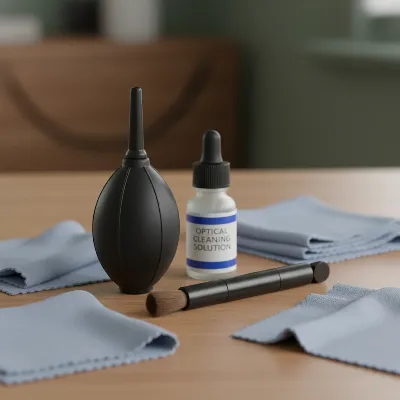 Essential tools for safe spotting scope lens cleaning, including an air blower, lens brush, and microfiber cloth
Common Mistakes to Avoid When Cleaning Optics
Even with the right tools, certain practices can lead to damage. Be aware of these common pitfalls:
- Using Abrasive Materials: Never use paper towels, facial tissues, rough cotton cloths, or your shirt to clean lenses. These materials are abrasive and can cause microscopic scratches that accumulate over time, degrading clarity.
- Harsh Chemicals: Avoid household glass cleaners like Windex, ammonia-based solutions, or harsh degreasers on lenses. These chemicals can strip away delicate lens coatings, leading to permanent damage.
- Applying Excessive Pressure: Scrubbing or pressing too hard on the lens can grind dust particles into the coating, causing scratches. Always use a light, gentle touch.
- Cleaning Too Frequently: As mentioned, only clean when necessary. Over-cleaning increases the risk of damage. Minor dust often doesn’t affect performance noticeably.
- Spraying Solution Directly Onto Cloth: Always mist the cleaning solution directly onto the lens, not the cloth. Applying solution to the cloth first can lead to uneven distribution and excessive moisture.
- Reusing Dirty Cloths: A dirty microfiber cloth can introduce new contaminants or spread existing ones. Use only clean cloths and wash them regularly, separate from other laundry, without fabric softener.
Beyond Lenses: Cleaning Your Spotting Scope Body
While the lenses demand the most delicate care, the body of your spotting scope also benefits from occasional cleaning to prevent grime buildup and maintain its appearance and function.
For the main body, a soft, damp cloth with plain water is usually sufficient to wipe away dirt and smudges. If there are more stubborn marks, a very mild, diluted dish soap solution can be used, but ensure it’s wiped off thoroughly. For textured areas, grooves, or around dials and moving parts where dirt can accumulate, a soft-bristled toothbrush can be effective for gently dislodging debris. Always ensure no liquids penetrate seals or enter optical components. Dry the body completely after cleaning.
 An outdoor enthusiast cleaning the body of a spotting scope in a rugged natural environment
Maintaining Your Spotting Scope’s Pristine Condition
Prevention is always better than cure when it comes to keeping your spotting scope clean. By adopting a few simple habits, you can significantly reduce the need for extensive cleaning and extend the life of your optics.
- Always Use Lens Covers: This is the most effective way to protect your lenses from dust, dirt, and accidental scratches when not in use. Ensure both objective and eyepiece covers are in place during transport and storage.
- Store Properly: When not in use, store your spotting scope in its protective case in a cool, dry, and dust-free environment. Avoid extreme temperatures and humidity, which can promote fungal growth or condensation.
- Handle with Care: Always handle your scope by the body, minimizing contact with the lenses. Avoid touching the glass with your fingers, as skin oils are notoriously difficult to remove.
- Clean When Necessary, Not Habitually: Adopt the mantra: “If it’s not dirty, don’t clean it!” Minor dust on the objective lens rarely impacts viewing quality significantly. Only clean when smudges, fingerprints, or heavy dust genuinely impair your view.
Conclusion
A clean spotting scope is a clear spotting scope, and by following these safe, at-home cleaning techniques, you can ensure your optical investment continues to provide breathtaking views. Remember to prioritize caution and gentleness in every step, from selecting the right tools to executing the delicate wiping motions. Protecting your lenses from scratches and preserving their coatings is key to maintaining your scope’s performance and longevity. With a little care and the right approach, you’ll always be ready to explore the world with crystal-clear vision. What hidden wonders will you discover with your perfectly maintained optics?
Frequently Asked Questions
How often should I clean my spotting scope lenses?
You should clean your spotting scope lenses only when they appear dirty enough to visibly affect your viewing quality, such as from smudges, fingerprints, or heavy dust. Minor dust often doesn’t require cleaning, as excessive cleaning increases the risk of scratches.
Can I use household glass cleaner on my spotting scope?
No, it is strongly advised against using household glass cleaners like Windex or ammonia-based products on your spotting scope lenses. These products contain harsh chemicals that can strip away or damage the delicate optical coatings designed to enhance light transmission and protect the glass.
What’s the best way to remove stubborn marks or greasy smudges?
For stubborn marks or greasy smudges that an air blower and brush can’t remove, use a dedicated optical lens cleaning fluid or a small amount of 90%+ isopropyl alcohol, applied with a lint-free microfiber cloth using gentle, circular motions from the center outwards.
Is it okay to clean the lenses dry?
Never attempt to dry-wipe your spotting scope lenses, especially if there’s any visible dust or debris. Dry wiping will grind the particles into the lens surface, causing permanent scratches. Always remove loose dust with an air blower first, and use a cleaning solution for smudges.
What are lens filters for?
Lens filters are accessories that can be attached to the objective lens of some Spotting Scopes. They serve as an additional protective layer against dust, dirt, and physical impacts, allowing you to clean the filter instead of the primary objective lens, which significantly reduces wear and tear on your main optics.