Many enthusiasts wonder if their versatile spotting scope, typically used for daytime wildlife observation or target shooting, can effectively serve as a window to the night sky. While dedicated astronomical telescopes are purpose-built for celestial viewing, a good quality spotting scope can indeed offer surprising capabilities for exploring the cosmos after dusk. If you already own one, or are considering a dual-purpose optical instrument, understanding its strengths and limitations for astronomy will unlock a new dimension to your observational adventures.
What is a Spotting Scope and What is it Used For?
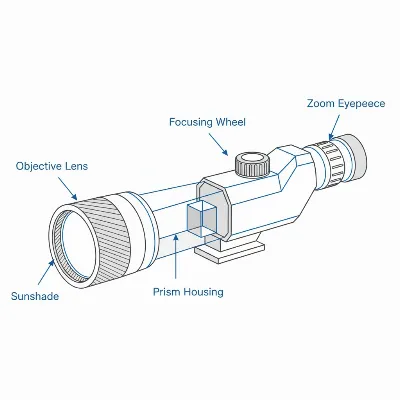
A spotting scope is a compact, high-magnification optical instrument designed to provide magnified views of distant objects. Functionally similar to a small refracting telescope, it is characterized by its portable design and robust construction, often making it ideal for outdoor activities. The primary components of a spotting scope include an objective lens, a prism system to correct the image orientation, an eyepiece (which can be fixed or zoom), and a focusing mechanism, all housed within a durable body.
Spotting scopes are primarily utilized for terrestrial observation, excelling in activities such as birdwatching, wildlife spotting, hunting, and target shooting, where their high magnification and ability to render erect (right-way-up) images are invaluable. However, their optical design also allows them to peer beyond the horizon and into the night sky, making them a surprisingly capable tool for entry-level astronomy, particularly for brighter celestial objects.
Spotting Scope vs. Astronomical Telescope for Night Sky Viewing
While both spotting scopes and astronomical telescopes magnify distant objects, they are fundamentally designed with different primary uses in mind, leading to distinct performance characteristics for night sky observation. Understanding these differences is crucial for managing expectations and choosing the right tool for your specific astronomical pursuits.
Spotting scopes are built for ruggedness and portability, optimized for terrestrial viewing during the day. This typically means they offer an erect image, which is essential for land-based observation, and often feature robust, weather-sealed constructions. Astronomical telescopes, on the other hand, prioritize light-gathering capability and high magnification for faint, distant celestial objects, often producing an inverted image that is inconsequential for space but impractical for terrestrial use.
One of the most significant distinctions lies in aperture and light gathering. Telescopes generally boast larger objective lenses, allowing them to collect more light, which is paramount for viewing dim deep-sky objects. Spotting scopes, focused on portability, usually have smaller apertures (typically 50mm to 100mm) compared to many astronomical telescopes. Consequently, while a spotting scope can provide decent views of bright objects, it may struggle with fainter galaxies or nebulae. “You get much more for your money with a refractor designed for astronomy. With spotting scopes, you’re paying a premium for ruggedness, waterproofing, erect image, and sleek styling.”
Another key difference is magnification and eyepiece versatility. Many spotting scopes come with integrated zoom eyepieces (e.g., 20-60x), offering convenient variable magnification. While some higher-end models allow for interchangeable astronomical eyepieces, telescopes almost universally feature interchangeable eyepieces, providing a much wider range of magnification options and adaptability for different celestial targets. Spotting scopes are also praised for their superior portability and durability, often being smaller, lighter, and more weather-resistant than many telescopes, making them excellent “grab-and-go” instruments for quick observations. However, their angled eyepieces, while ergonomic for terrestrial viewing, can become uncomfortable when trying to observe objects directly overhead in the night sky.
Key Features to Look for in a Spotting Scope for Astronomy
If you intend to use your spotting scope for night sky observations, certain features will significantly enhance your experience, bridging some of the gaps between a terrestrial scope and a dedicated astronomical instrument.
The objective lens diameter (aperture) is perhaps the most critical factor. For effective stargazing, aim for a spotting scope with an objective lens of 80mm or larger. A wider aperture collects more light, resulting in brighter, clearer images of celestial objects, which is particularly beneficial in low-light conditions. While smaller scopes can show the Moon, larger apertures reveal more detail and allow for views of fainter objects.
Optical quality is another paramount consideration. Spotting scopes featuring Extra-Low Dispersion (ED) glass are highly recommended. ED glass minimizes chromatic aberration, a common optical flaw that can cause colored fringing around bright objects, especially at high magnifications. This ensures a sharper image with truer color fidelity, vital for discerning details on the Moon or planets.
While many spotting scopes come with fixed zoom eyepieces, which are convenient for quickly scanning and then zooming in, some higher-end models offer interchangeable eyepieces. This allows you to select specific magnifications tailored to different celestial targets, similar to an astronomical telescope. A magnification range up to 60x-70x is generally sufficient for basic astronomy, including the Moon, brighter planets, and open clusters.
A stable tripod is an absolute necessity. At high magnifications, even the slightest tremor can cause the image to shake excessively, making observation frustrating. A sturdy, stable tripod will ensure steady views, allowing you to appreciate the intricate details of celestial bodies. Furthermore, consider the eyepiece configuration: an angled eyepiece is often preferred for terrestrial use, but a straight eyepiece might be more comfortable for astronomical viewing when observing objects high in the sky, though an angled eyepiece can still work if adjusted properly.
Best Spotting Scope Models for Stargazing
While most spotting scopes are designed with daytime use in mind, several models offer excellent optical performance that also translates well to nighttime astronomy, especially for beginners or those seeking a versatile “do-it-all” instrument. These scopes typically feature larger objective lenses and high-quality optics.
Here’s a comparison of some highly-regarded spotting scopes that perform admirably for stargazing:
| Model | Magnification | Objective Diameter | Key Features | Price Range (Approx.) |
|---|---|---|---|---|
| Celestron Regal M2 80ED | 20-60x | 80mm | ED glass, XLT multi-coatings, dual-focus, waterproof | $700 – $900 |
| Vortex Viper HD 85mm | 20-60x | 85mm | HD optical system, XR anti-reflective coatings, Argon purged, waterproof | $900 – $1100 |
| Zeiss Conquest Gavia 85 | 30-60x | 85mm | HD lens system, LotuTec/T* coating, nitrogen filled, waterproof | $4000+ |
| Celestron Ultima 100 | 22-66x | 100mm | Multi-coated optics, waterproof, angled eyepiece, rotating tripod mount | $400 – $550 |
| Maven CS.1 15-45x65mm | 15-45x | 65mm | ED glass, multi-coated lenses, lightweight, angled or straight | $800 – $950 |
Note: Prices are approximate and can vary based on retailer and promotions.
The Celestron Regal M2 80ED is frequently cited for its excellent balance of performance and value, offering ED glass and multi-coatings that deliver sharp, bright images, making it suitable for both terrestrial and astronomical observation. The Vortex Viper HD series also offers robust construction and high optical clarity, popular among outdoor enthusiasts who occasionally turn their gaze upwards. For those on a tighter budget but wanting a larger aperture, the Celestron Ultima 100 provides impressive light-gathering capabilities for its price point, allowing for good views of the Moon and planets. “The Celestron Ultima 100 is a powerful spotting scope that delivers bright, sharp views thanks to its large 100mm objective lens and multi-coated optics.”
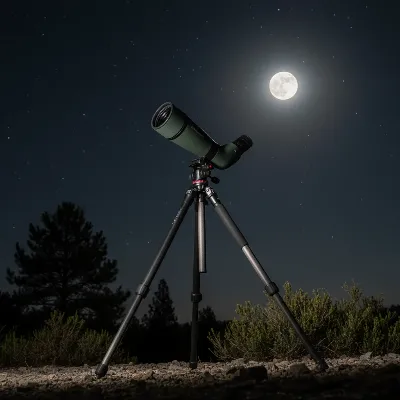 A high-quality spotting scope setup on a sturdy tripod under a starry night sky, pointing towards the Moon or a bright planet. The scope should look sleek and modern, emphasizing its astronomical use.
Tips for Using Your Spotting Scope for Nighttime Astronomy
Using a spotting scope effectively for astronomy requires a slightly different approach than daytime observation. With the right techniques, you can maximize your viewing pleasure and discover more of the night sky.
Firstly, always start with a low magnification. This provides a wider field of view, making it significantly easier to locate celestial objects. Once your target is centered and focused, you can then switch to a higher magnification (if your scope allows for interchangeable eyepieces) or zoom in to examine finer details. For instance, the Moon appears stunning even at moderate magnifications, revealing craters and mare.
A sturdy tripod is non-negotiable. Any vibration will be greatly amplified at higher magnifications, turning a sharp image into a blurry mess. Ensure your tripod is stable and set up on solid ground. Allow your scope to acclimate to the ambient outdoor temperature for about 15-30 minutes before serious viewing. This prevents internal air currents (tube currents) caused by temperature differences from distorting the image, ensuring optimal clarity.
Familiarize yourself with the night sky using a star chart or a stargazing app before heading out. This will help you locate constellations and pinpoint brighter targets like the Moon, visible planets (Jupiter, Saturn, Mars, Venus), and some prominent star clusters (e.g., Pleiades, Orion Nebula) that are within the capabilities of a good spotting scope. Be mindful of light pollution, which can severely hinder your ability to see fainter objects. Seek out locations away from city lights for the best viewing experiences.
Finally, a growing trend is digiscoping, where you attach a smartphone or DSLR camera to your spotting scope for basic astrophotography. While professional astrophotography typically requires specialized telescopes and mounts, a spotting scope can capture impressive images of the Moon or brighter planets with the right adapter and technique.
Maintaining Your Spotting Scope for Longevity
Proper care and maintenance are essential to ensure your spotting scope continues to deliver clear views of both terrestrial and celestial wonders for years to come. Neglecting maintenance can lead to degraded image quality and a shortened lifespan for your optical instrument.
Cleaning the optics should be done gently and sparingly. Dust on the objective lens is normal and rarely affects image quality, so avoid over-cleaning. When necessary, use a soft lens brush to remove loose dust particles, followed by a few drops of specialized optical cleaning solution on a clean microfiber lens cloth. Breathe lightly on the lens to fog it, then gently wipe in a circular motion from the center outwards. Avoid harsh chemicals or abrasive materials, which can damage lens coatings.
When not in use, always store your spotting scope in its protective case or bag. This shields it from dust, dirt, and accidental impacts. Keep the scope in a cool, dry place, away from direct sunlight or extreme temperature fluctuations, which can affect internal components and coatings. If your scope is nitrogen-purged and waterproof, it’s more resistant to internal fogging and moisture damage, but it’s still best to dry it thoroughly if it gets wet before storing. Regularly check all moving parts, such as the focus knob and eyepiece attachment, to ensure they operate smoothly. Lubricate sparingly with appropriate optical-grade lubricants if needed, following the manufacturer’s guidelines.
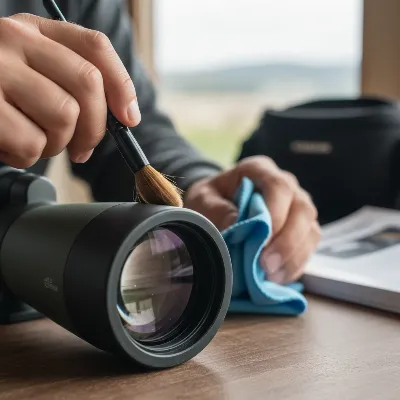 A person gently cleaning the objective lens of a spotting scope with a soft brush and a microfiber cloth in a clean, well-lit environment. Emphasize care and precision in the action.
Conclusion
The question, “Can You Use A Spotting Scope For Astronomy At Night?” is definitively answered with a resounding “yes!” While not a direct replacement for a dedicated astronomical telescope, a spotting scope offers a highly portable and capable entry point into night sky observation. They excel at showcasing the Moon’s rugged surface, the rings of Saturn, the moons of Jupiter, and brighter star clusters, making them perfect for casual stargazers, travelers, or those who appreciate a dual-purpose optical instrument. Their ruggedness and ease of use present significant advantages over some more delicate and complex astronomical setups. For serious deep-sky enthusiasts, a specialized telescope will ultimately offer greater light gathering and higher magnifications. However, for anyone looking to bridge the gap between terrestrial and celestial viewing, a quality spotting scope provides a fantastic, versatile option that will undoubtedly enhance your appreciation for the wonders above. So, why not point your scope skyward tonight and see what mysteries await?
Frequently Asked Questions
What celestial objects can I see with a spotting scope?
|
Our Picks for the Best Spotting Scope in 2026
As an Amazon Associate I earn from qualifying purchases.
|
||
| Num | Product | Action |
|---|---|---|
| 1 | SVBONY SV28 20-60x80 New Version Spotting Scope for Target Shooting, Long Range Spotter Scope with Phone Adapter and Tripod, HD Scope for Bird Watching, Wildlife Observation |

|
| 2 | SVBONY SV28 Plus Spotting Scopes with Tripod, Angled Spotter Scope with Upgraded Phone Adapter, IP65 Waterproof Fogproof Long Range Spotting Scope for Target Shooting, Birding |
|
| 3 | SVBONY SV28 Spotting Scopes with Tripod, Angled 25-75x70mm Spotter Scope with Phone Adapter, Waterproof Fogproof Spotting Scope for Bird Watching, Target Shooting, Wildlife Viewing |
|
| 4 | Gosky Flagship 25-75x80 Spotting Scope - Spotting Scopes with Tripod, Carrying Bag and Quick Phone Holder BAK4 Waterproof Spotter Scope for Bird Watching Target Shooting,Upgraded Version |
|
| 5 | SVBONY SV28 100mm Angled Spotting Scope for Target Shooting, 25-75x Spotter Scope with Tripod for Long Range Viewing, FMC HD Optics with Soft Carrying Case & Phone Adapter, Scopes for Birdwatching |
|
| 6 | High-Definition Spotting Scope for Bird Watching,Wildlife Viewing,Beginners Telescope,Target Observation.25-75×60mm HD Spotting Scope with Tripod and Phone Adapter,Monocular |
|
| 7 | Gosky Flagship DiamondEdge 20-60x80 Spotting Scope with Tripod, Carrying Bag and Quick Phone Holder - BAK4 High Definition Waterproof Spotter Scope for Bird Watching Wildlife observing,Green |
|
| 8 | 25-75x70 HD Spotting Scope with BAK4 Prism FMC Lens, IPX7 Floating Fully Waterproof Spotting Scopes for Target Shooting Birding Wildlife Viewing Stargazing, Tripod Phone Adapter Carrying Bag(Green) |
|
| 9 | Spotting Scope 20-60x60mm - Waterproof IPX7 Spotter Scope with Phone Adapter and Tripod, Portable for Bird Watching Wildlife observing and Hiking, Black |
|
| 10 | 25-75X60 Spotting Scope with 51in Tripod, Spotting Scope for Target Shooting, Hunting & Bird Watching, Low Light Vision, Phone Adapter, Carry Bag, BAK4 Prism, FMC Lens, Waterproof (ArmyGreen) |
|
With a quality spotting scope, you can enjoy impressive views of the Moon, including its craters and seas, as well as the brighter planets like Jupiter (often revealing its four largest moons) and Saturn (with its iconic rings). You can also observe some of the brighter deep-sky objects such as prominent open star clusters (e.g., the Pleiades) and nebulae (e.g., the Orion Nebula), especially under dark skies.
Is an angled spotting scope better for astronomy than a straight one?
For terrestrial viewing, an angled spotting scope often offers more comfortable viewing positions. However, for observing objects directly overhead in the night sky, a straight-through scope can sometimes be more intuitive. Despite this, many astronomers successfully use angled spotting scopes by adjusting their tripod height or sitting comfortably, making the choice often a matter of personal preference and primary use.
How much magnification do I need for viewing planets with a spotting scope?
For viewing planets, a magnification of 40x to 60x is generally a good starting point to discern details like Jupiter’s bands or Saturn’s rings. While spotting scopes typically offer up to 60x or 70x magnification, remember that higher magnification doesn’t always equate to better views, especially if the objective lens is too small to gather enough light or if atmospheric conditions are poor.
Can I use a spotting scope for astrophotography?
Yes, you can use a Spotting Scope for basic astrophotography, particularly for capturing images of the Moon and brighter planets. This technique, known as digiscoping, involves attaching a smartphone or a DSLR camera to the eyepiece using a specialized adapter. While it won’t match the capabilities of dedicated astrophotography setups, it can produce surprisingly good results for a casual observer.